
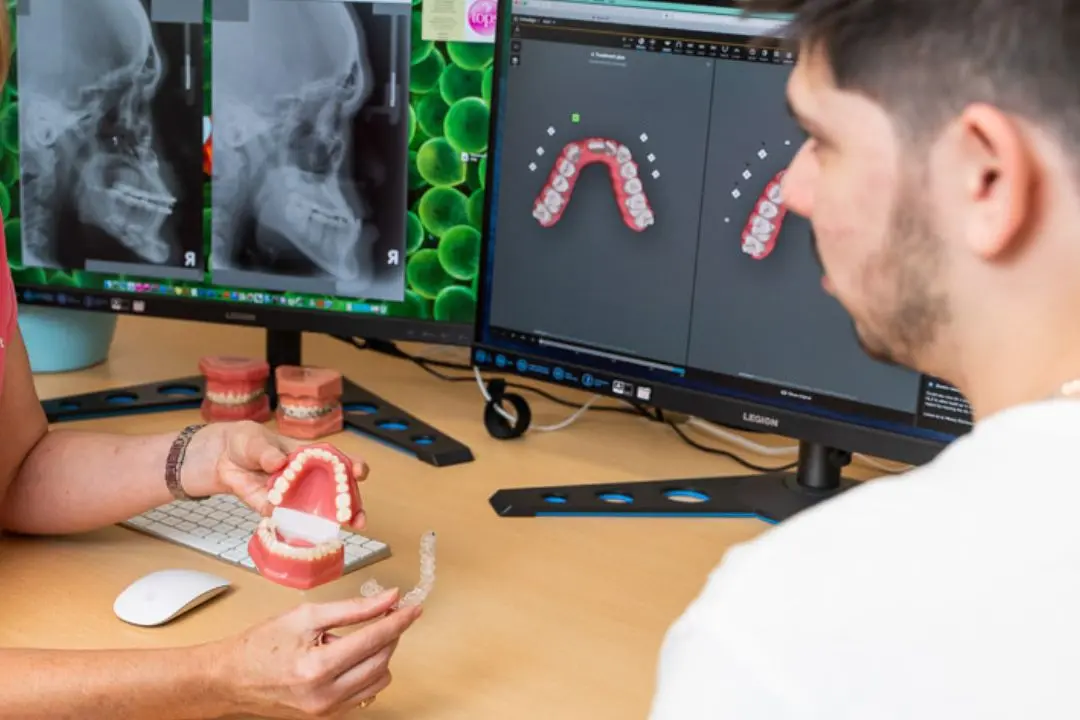
Overcrowded teeth are one of the most common reasons people seek orthodontic treatment. It’s something many notice in childhood or teenage years, but it can also become more apparent in adulthood as teeth naturally shift over time.
At Noranda Orthodontics, Dr Trudy sees crowding in many different forms, from mild overlapping to significant lack of space affecting bite and function. The good news is that orthodontics offers predictable, effective ways to manage it at almost any age.
What are overcrowded teeth?
Tooth overcrowding happens when there isn’t enough space in the jaw for all teeth to align properly. As a result, teeth may:
- Overlap or twist
- Push forward or rotate
- Become difficult to clean properly
- Appear uneven in the smile line
Crowding can affect just the front teeth or involve the entire bite, depending on the underlying cause.
What causes overcrowded teeth?
There isn’t usually one single cause. Instead, crowding develops from a combination of factors such as:
1. Jaw size and tooth size mismatch
Some people naturally have smaller jaws but normal-sized teeth, meaning there simply isn’t enough space.
2. Early loss of baby teeth
If baby teeth are lost too early, surrounding teeth can drift into the empty space, reducing room for adult teeth.
3. Genetics
Crowding often runs in families. If parents had crowded teeth, children may be more likely to experience it too.
4. Natural changes over time
Even after previous orthodontic treatment, teeth can slowly shift if retainers aren’t worn consistently.
Why overcrowding isn’t just a cosmetic issue
While many people seek treatment because of how crowded teeth look, the impact goes beyond appearance.
Crowded teeth can lead to:
- Difficulty brushing and flossing properly
- Higher risk of plaque buildup and decay
- Gum inflammation in hard-to-reach areas
- Uneven wear on certain teeth
- Bite discomfort or imbalance in more complex cases
This is why orthodontics often focuses on both function and aesthetics when treating crowding.
How orthodontics corrects overcrowded teeth
At Noranda Orthodontics, Dr Trudy takes a structured approach to managing crowding based on the severity and cause of the issue.
Creating space
One of the first goals is to create the space needed to align teeth. This may involve:
- Gentle expansion in certain cases
- Strategic tooth movement
- Selective reshaping of tooth surfaces (when appropriate)
- In some cases, planned extractions if space is severely limited
Aligning the teeth
Once space is available, orthodontic appliances guide teeth into their correct positions. This may be done using:
- Fixed braces
- Clear aligners (in suitable cases)
- A combination approach for more complex movement
Refining the bite
Final stages focus on ensuring teeth fit together properly, not just look straight.
Braces vs aligners for overcrowded teeth
Both braces and aligners can be effective, but suitability depends on the complexity of the crowding.
- Braces are often preferred when crowding is more severe or when precise control is needed for tooth movement.
- Clear aligners can be highly effective for mild to moderate crowding, especially when compliance is consistent.
Dr Trudy carefully assesses which option will provide the most predictable and stable outcome for each individual case.
Can overcrowded teeth get worse if left untreated?
Yes, crowding can gradually increase over time. Teeth naturally shift throughout life, and without intervention, the problem may become more noticeable.
Leaving significant crowding untreated can also make oral hygiene more difficult, which may contribute to long-term dental concerns.
What to expect during treatment at Noranda Orthodontics
Patients are often surprised by how structured the process is. At Noranda Orthodontics, Dr Trudy begins with a detailed assessment to understand:
- How severe the crowding is
- Whether the bite is affected
- How much space is needed for correction
- The most suitable treatment approach
From there, a personalised plan is created so patients understand exactly what will happen and why.
The importance of retention after crowding correction
Once overcrowded teeth are corrected, retainers play a key role in maintaining results. Teeth have a natural tendency to shift back, especially in cases where crowding was present originally.
Retention helps ensure that:
- Teeth stay aligned long-term
- Bite correction is maintained
- Treatment results remain stable
This is one of the most important parts of orthodontics, even though it happens after active treatment ends.
Overcrowded teeth are common, but they are also highly treatable with modern orthodontics. Whether the issue is mild or more complex, treatment is designed to improve not just the appearance of the smile, but also function and long-term oral health.
At Noranda Orthodontics with Dr Trudy, every case is approached individually, with a focus on creating space, guiding alignment, and building a result that lasts.
If you’re noticing crowding in your teeth, an orthodontic assessment is the best first step to understand what’s happening and what can be done about it.


